The Dora Chronicles: High-Speed to Cuenca, Gravity-Defying Bridges, & The Ultimate Gorge Hike

June 30, 2026
So, the secret is officially out. John made a joke the other day and called me Dora the Explorer. He even bought me a kick-ass backpack, which I am only now realizing was strategically selected to complete the full Dora look.
But honestly? He’s not wrong. I leaned right into the aesthetic, packed my new bag, and hopped on a high-speed train from Madrid straight into Cuenca. And let me tell you, it is absolutely not what I expected.
If you want a dramatic change of scenery that feels lightyears away from the capital without draining your wallet, this is the ultimate track.
The Lowdown on the High-Velocity Escape
Getting here is so easy it almost feels like a cheat code.
- The Transit Math: The high-speed train out of Madrid clocks in at just under an hour and costs a ridiculous €10. Once you touch down at the Cuenca station, a taxi into the historical centre is another €10, or you can hop on the local public buses for €1. It is remarkably affordable.
- The Night Vibe: The city is incredibly safe. When the sun goes down and the day-trippers head back to Madrid, the old stone town lights up like a film set. You can wander the winding alleys at 11 PM completely at ease.
The Lodging Matrix: Airbnbs vs. The Luxury Outposts
Where you drop your bags in Cuenca completely dictates your experience. You are choosing between centuries-old historic character and modern climate control and if you are heading here during the scorching Spanish summer, that choice is everything.
The Airbnb Reality Check: Read the Fine Print
I opted for an Airbnb to get that authentic, local old-town feel, but you need to go into this with your eyes wide open: if you are booking an apartment in the historical centre during the summer months, do not expect air conditioning.
- The Trap: These stunning, medieval stone buildings are protected historical structures. Most of them do not have and legally cannot install central AC systems. On a blazing July or August afternoon, those upper-floor apartments trap heat like an oven.
- The Survival Move: You will be lucky if your room even has a basic desktop fan. Do not just look at the pretty balcony photos; scroll deep into the amenity list and read the guest details carefully before you hit book. If it doesn't explicitly state AC is included, pack your patience (and maybe a handheld misting fan).
The Premium Hotel Alternatives
If you don't want to risk the summer sweat lottery, Cuenca has some incredible, rock-solid hotel bases that seamlessly blend history with full modern amenities:
- Parador de Cuenca: Perched directly on the edge of the Huécar gorge, right across the bridge from the Hanging Houses, this is a spectacular four-star luxury stronghold housed inside a brilliantly restored 16th-century Dominican convent. It has an outdoor pool, an elite cloistered courtyard, and crucially: powerful, modern air conditioning. Looking out at the illuminated cliffside at night from your room is an absolute masterclass in luxury travel.
- Hotel Convento del Giraldo: Tucked right into the heart of the old town just steps from the Plaza Mayor, this beautiful boutique hotel is built inside a 17th-century palatial house. It oozes historic charm with exposed wood beams and stone architecture but includes full independent climate control so you can cool down instantly after tackling the trails.
A Hiker’s Paradise: Conquering the Gorges
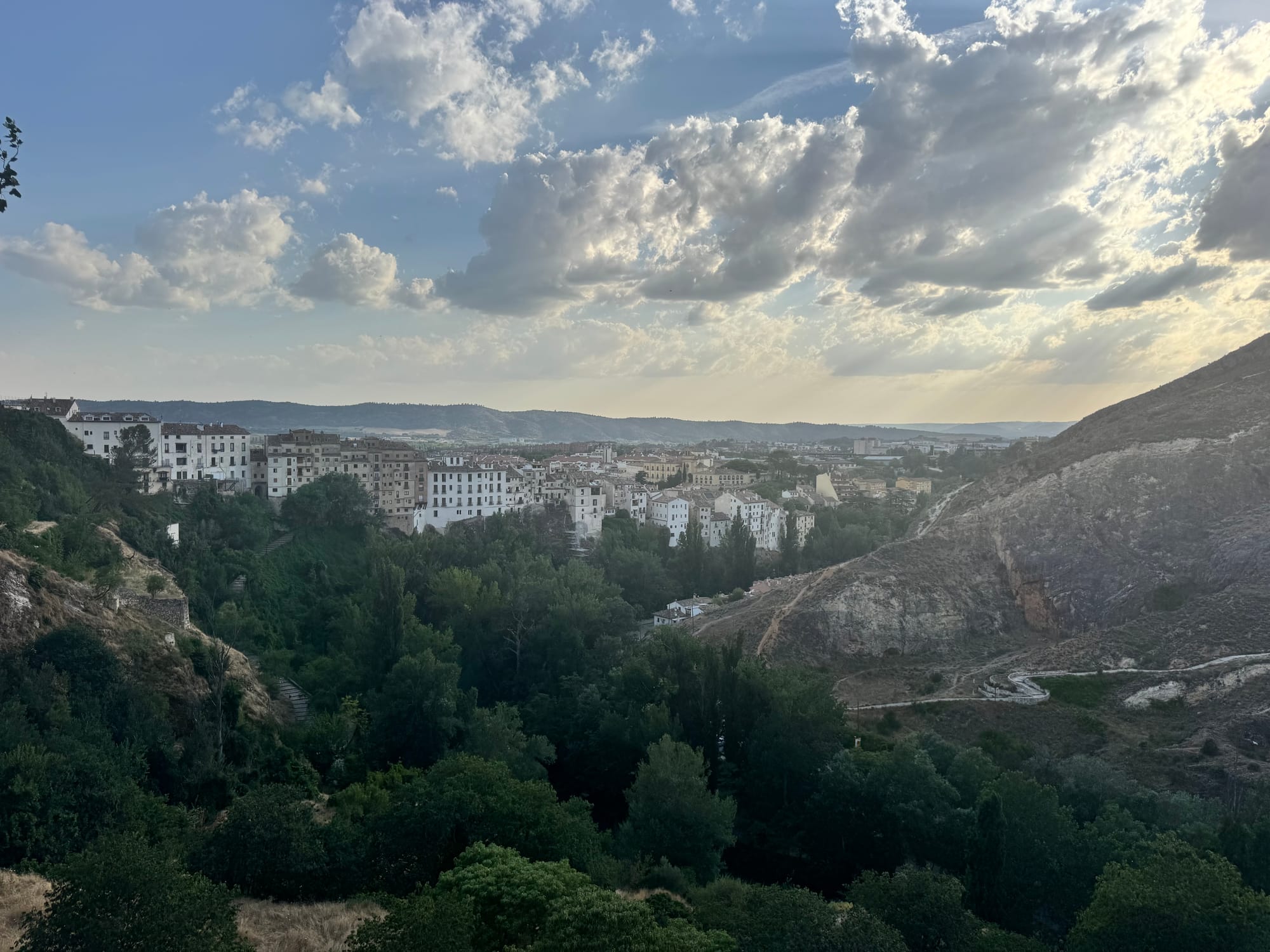
Cuenca is literally built on a knife-edge of limestone cliffs, squeezed between two massive river gorges: the Júcar and the Huécar. It is an absolute playground for anyone who loves to lace up their boots.
The historical sites here are mind-blowing the most iconic being the Casas Colgadas (Hanging Houses), which literally defy gravity by cantilevering over the sheer cliff face. To see them properly, you have to cross the Puente de San Pablo (San Pablo Bridge). It’s a jaw-dropping, iron-and-wood pedestrian footbridge suspended 60 meters in the air, connecting the two vertical sides of the gorge. Walking across it with the wind whipping through the canyon is pure adrenaline.
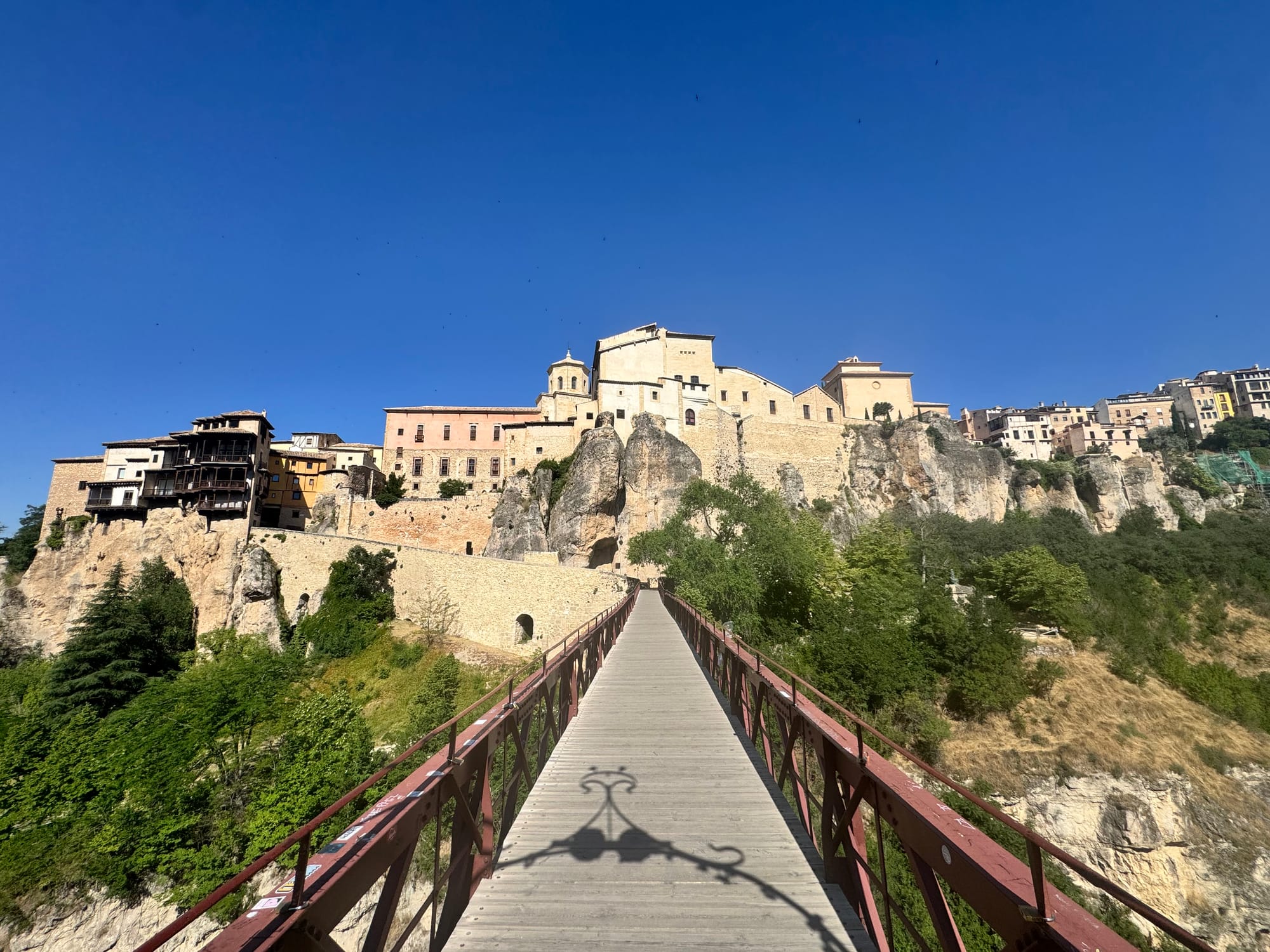
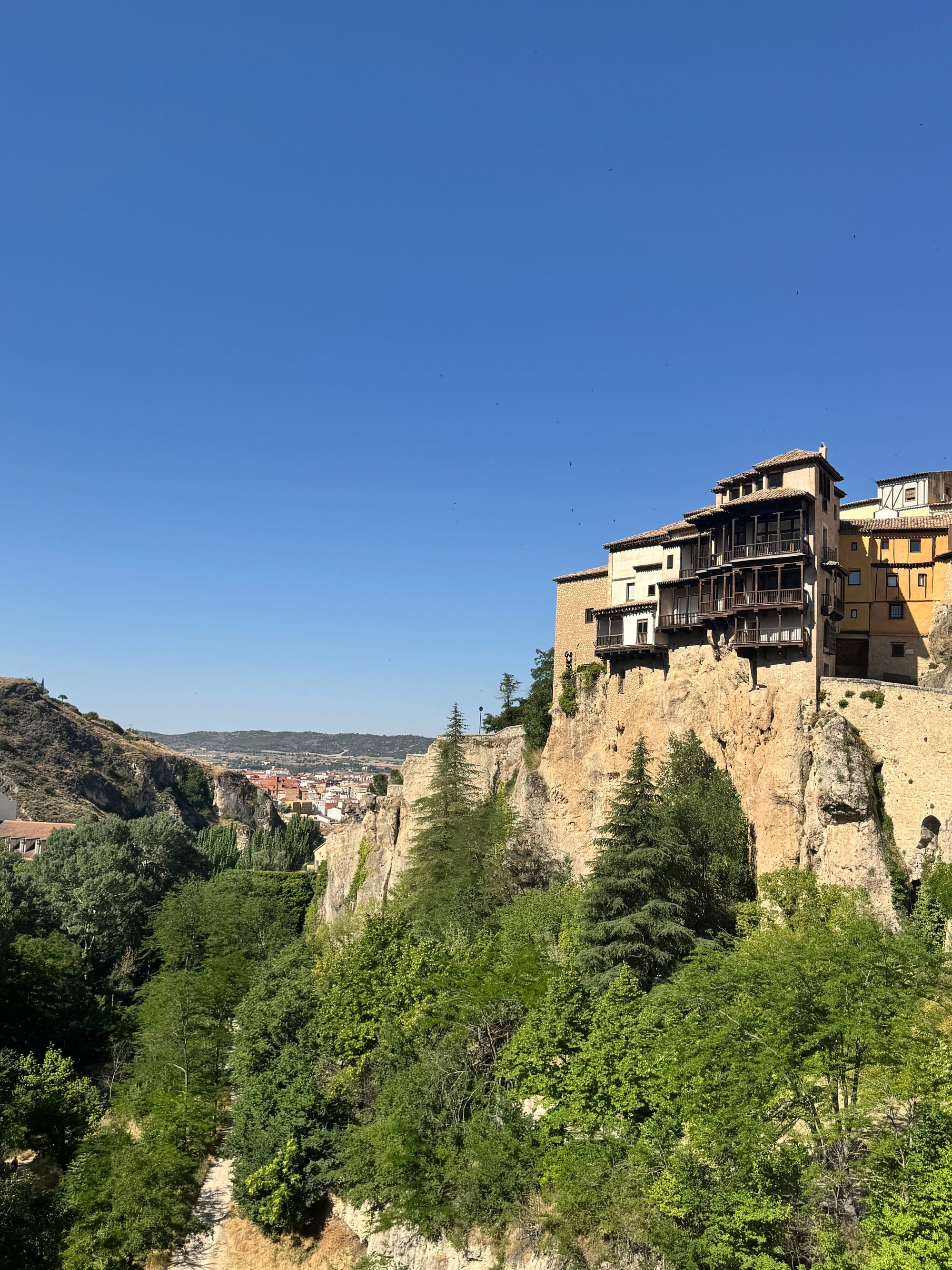
Once you cross over, the network of hiking trails opens up. The city has brilliantly colour-coded them into distinct paths:
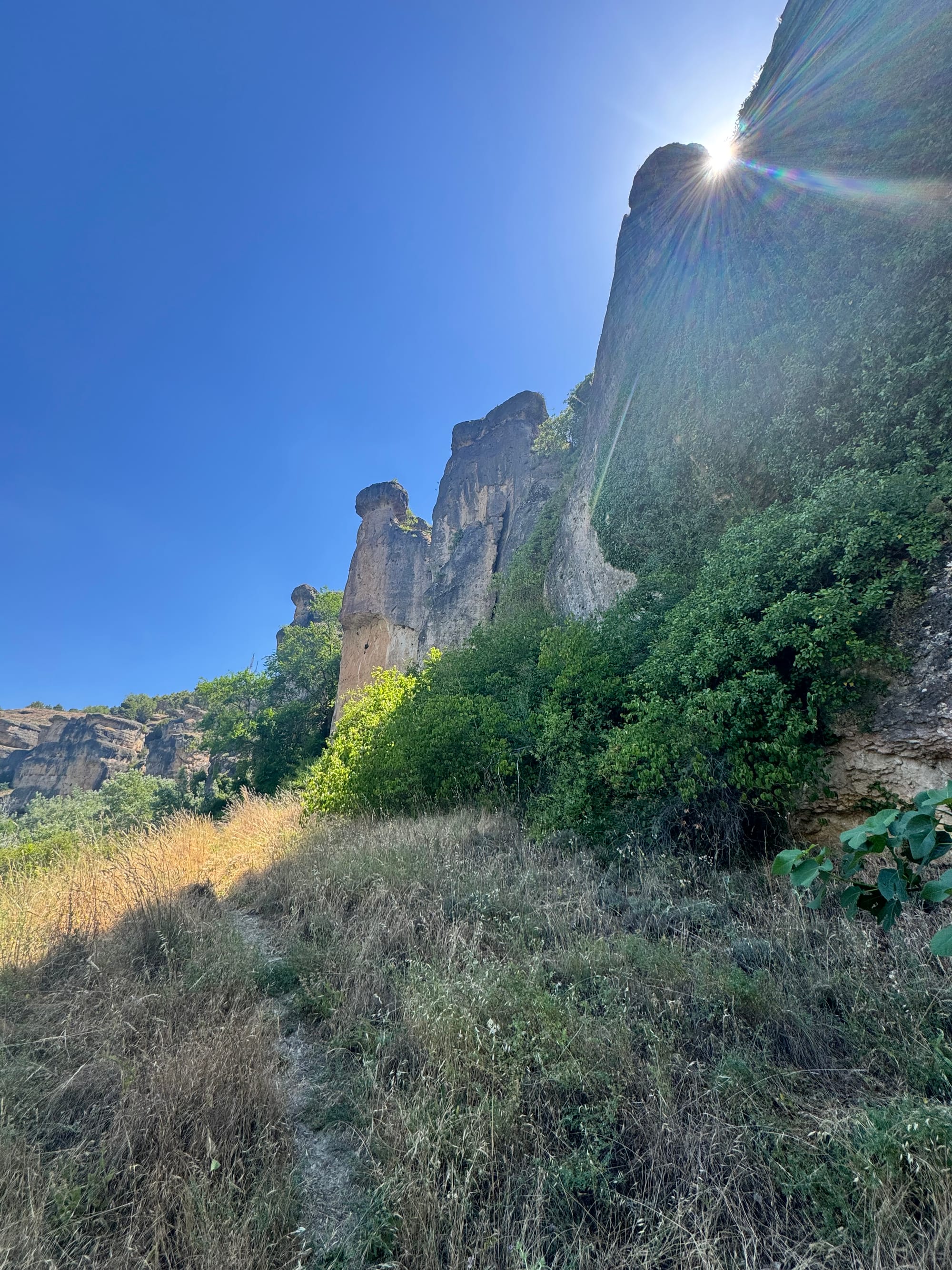
- The Huécar Gorge Walk: A moderate, winding trail that drops you right into the belly of the canyon. You are walking with vertical limestone walls towering hundreds of feet above you on both sides while eagles soar directly overhead.
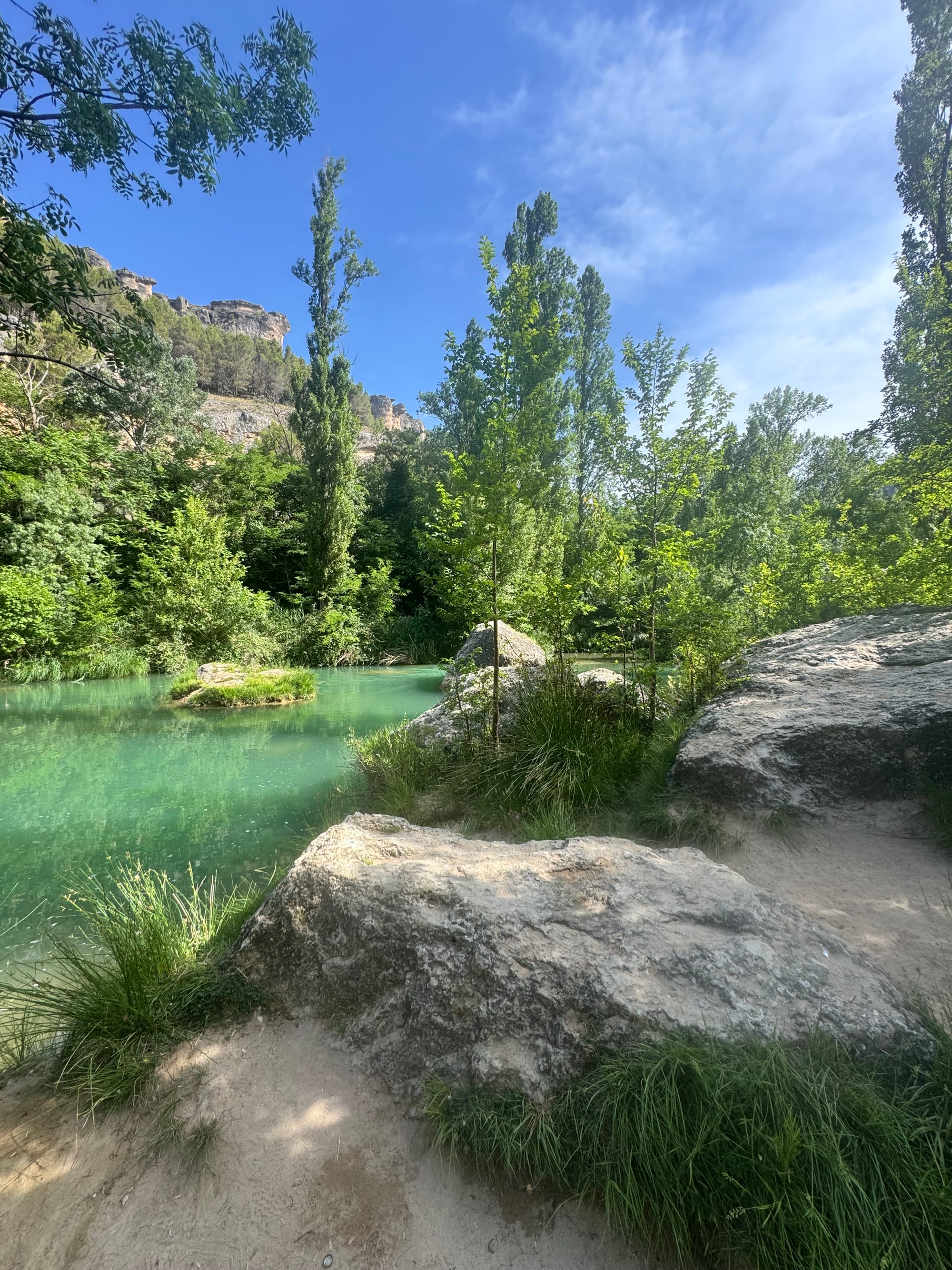
- The Júcar River Trail: This is a beautiful circular loop that runs right alongside the bright, emerald-green Júcar River. The vegetation is incredibly lush, and on a blazing hot Spanish afternoon, there are specific, calm shaded banks where the water slows down enough that you can jump right in for a wild swim. It is the ultimate natural cooldown after a steep climb.
The Fuel: Traditional Manchego Masterclass
All that exploring requires heavy-duty fuel, and Cuenca's food scene is elite but remarkably inexpensive.
The Traditional Legend: Mesón El Bodegón
Tucked away on Calle Cerro San Cristóbal, Mesón El Bodegón is a masterclass in authentic, no-nonsense Castilian-Manchego cooking. It has this gorgeous, rustic, old-school charm with an outdoor terrace that is perfect for a post-hike decompress.
You have to order the regional essentials here: Morteruelo (a warm, rich, heavily spiced traditional meat pâté made from small game, served with crusty bread) and their legendary Zarajos (marinated lamb trimmings wrapped around a vine shoot and roasted until the exterior is perfectly crispy).
The High-End Upgrade: Casas Colgadas & Raff San Pedro
If you want to flip the coin from the high-low lifestyle to pure luxury, Cuenca holds serious culinary real estate:
- Restaurante Casas Colgadas (One Michelin Star): You can literally dine inside one of the famous Hanging Houses. Helmed by chef Jesús Segura, this stunningly minimalist space serves up jaw-dropping tasting menus reinterpreting local ingredients like stewed rabbit. Eating elite gastronomy while hanging suspended over a dark, illuminated 60-meter canyon drop is an absolute core memory.
- Raff San Pedro: Tucked inside the historic center, this restaurant is built directly into a 300-year-old palace cellar. Chef José Ignacio Herraiz uses the space to revive ancient, traditional recipes with a hyper-contemporary, elegant twist. It is cozy, atmospheric, and highly sophisticated.
The Wine Track: Pouring the La Mancha Terroir
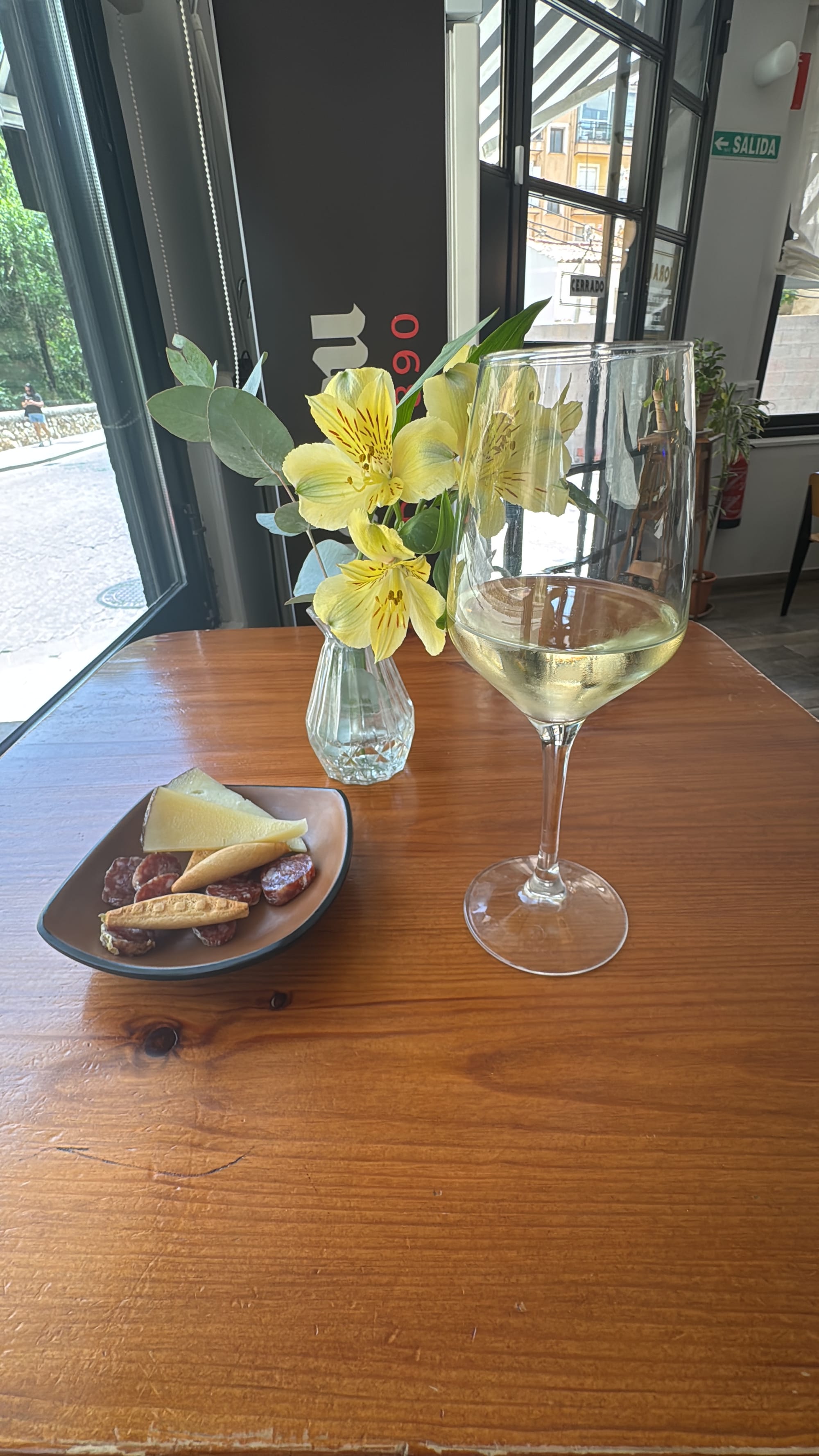
You cannot eat heavy Manchego cuisine without the proper structure in your glass. While Cuenca is surrounded by the massive, ocean-like vineyards of the greater Castilla-La Mancha region, you want to hunt down specific local denominations on the wine list:
- D.O. Ribera del Júcar: Right in Cuenca's backyard, these vineyards sit on an elevated plateau covered in smooth river pebbles. Look for red wines made from the Bobal grape. They are deep, intensely dark, and packed with ripe blackberry and wild herb notes that cut right through the richness of a hot plate of morteruelo.
- D.O. Uclés: Another incredible local appellation nearby. Seek out their old-vine Tempranillo (often called Cencibel locally). These wines are beautifully structured with smooth oak, dark cherry, and a hint of spice; the absolute ultimate sparring partner for a crispy plate of zarajos.
The Cliffside Sanctuaries: Stone, Light, and French Gothic Style
Because Cuenca has been a fortified spiritual stronghold since the medieval era, its collection of churches is unreal. They are vertical masterpieces packed with centuries of dramatic history.
The Crown Jewel: Catedral de Santa María y San Julián
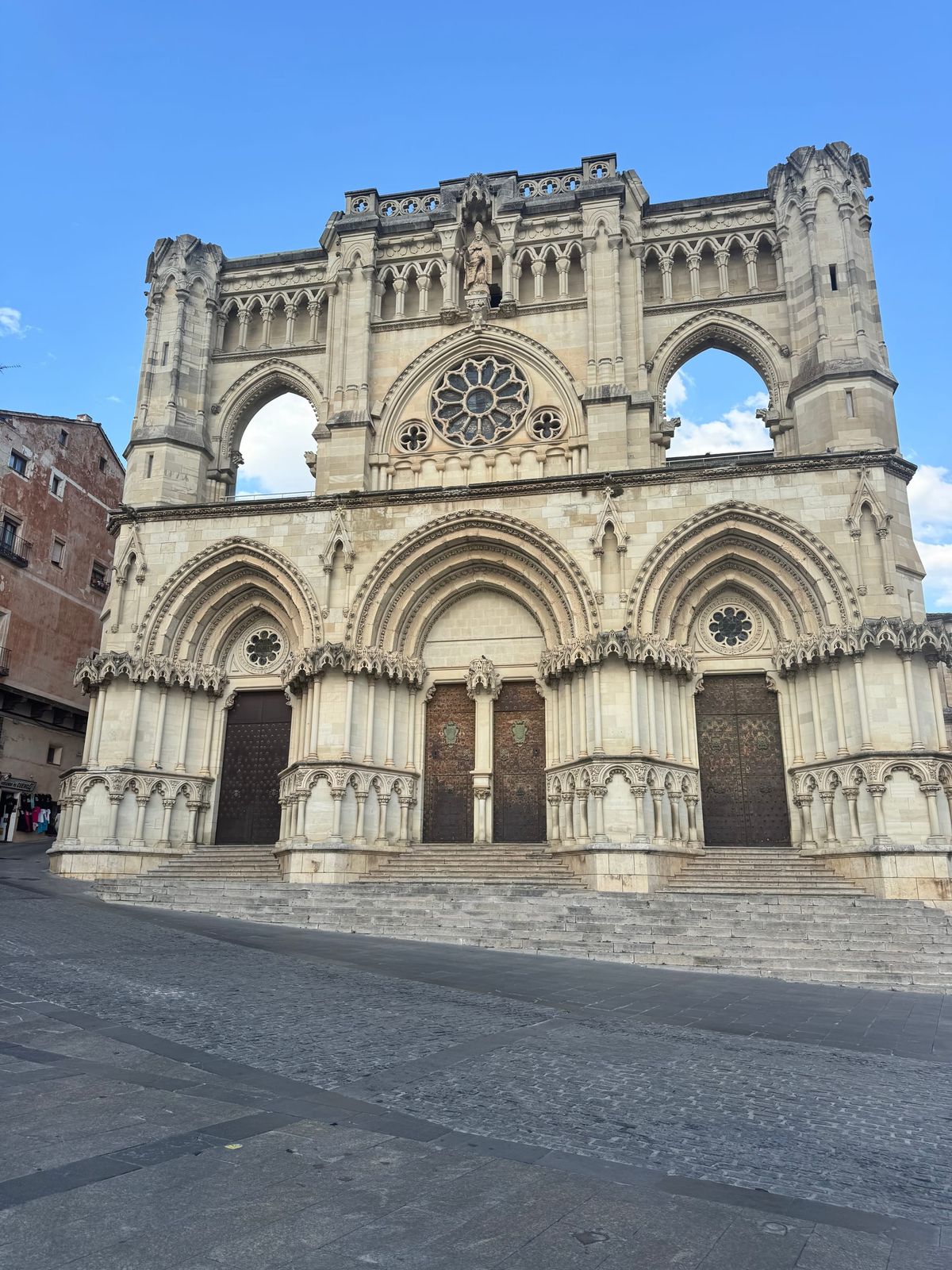
Dominating the colourful Plaza Mayor, Cuenca Cathedral is a massive, stunning shock to the system.
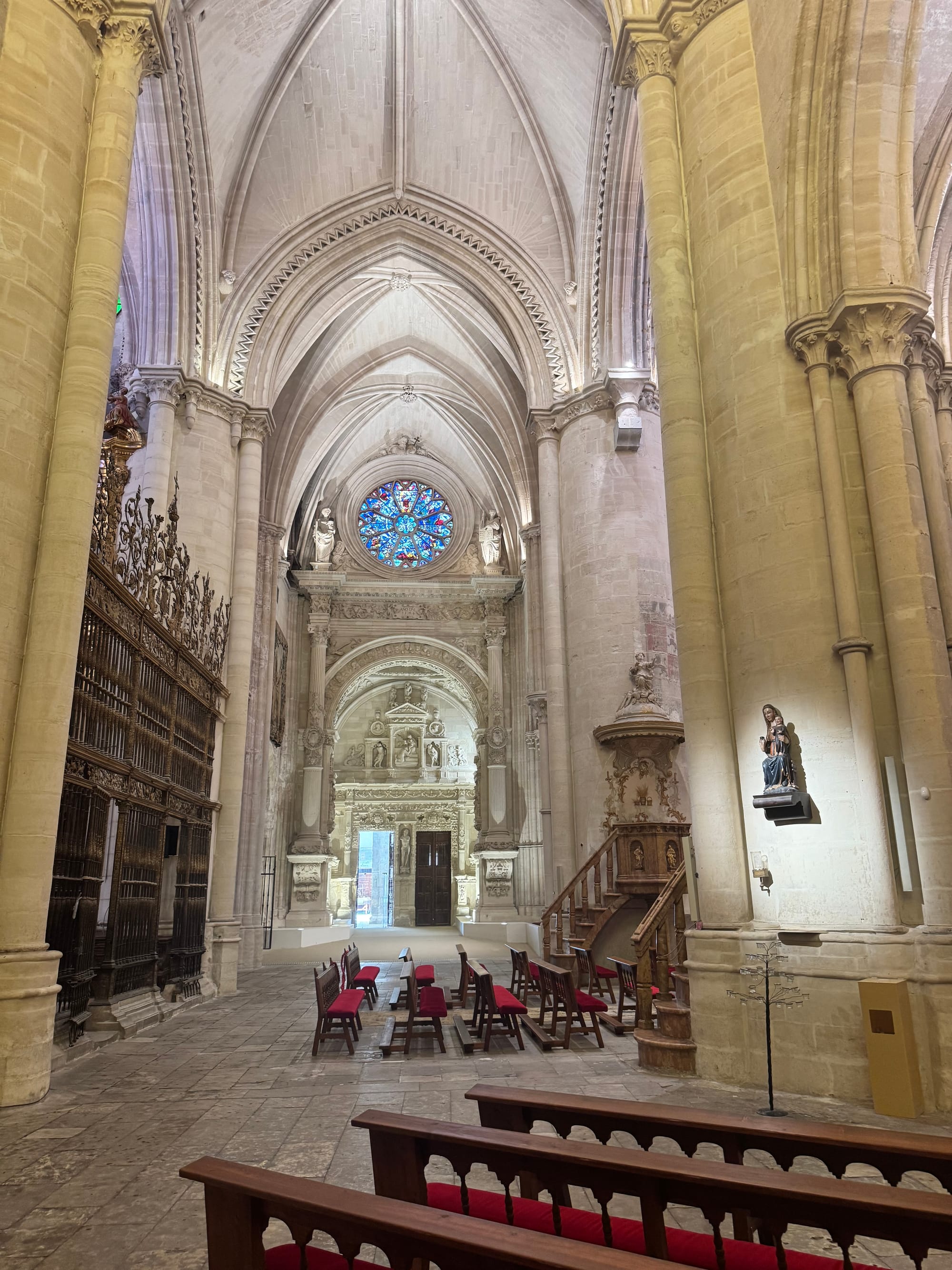
- The Blueprint: Construction started all the way back in 1182 right after the Reconquista on the site of a former Moorish mosque. Because King Alfonso VIII’s wife, Eleanor Plantagenet, was a Norman princess, French stonemasons were brought in to build it. That makes this building one of the earliest examples of Gothic architecture in Spain, heavily inspired by Notre-Dame de Paris.
- The Modern Twist: While the exterior looks like an imposing, austere medieval castle, walking inside is an absolute revelation. In the 20th century, the old plain windows were replaced with spectacular, vibrant, abstract modernist stained glass. Watching avant-garde, geometric slashes of neon pink and deep blue light cast across 800-year-old stone columns is an absolute trip.
The Vertigo Alternative: Iglesia de San Miguel
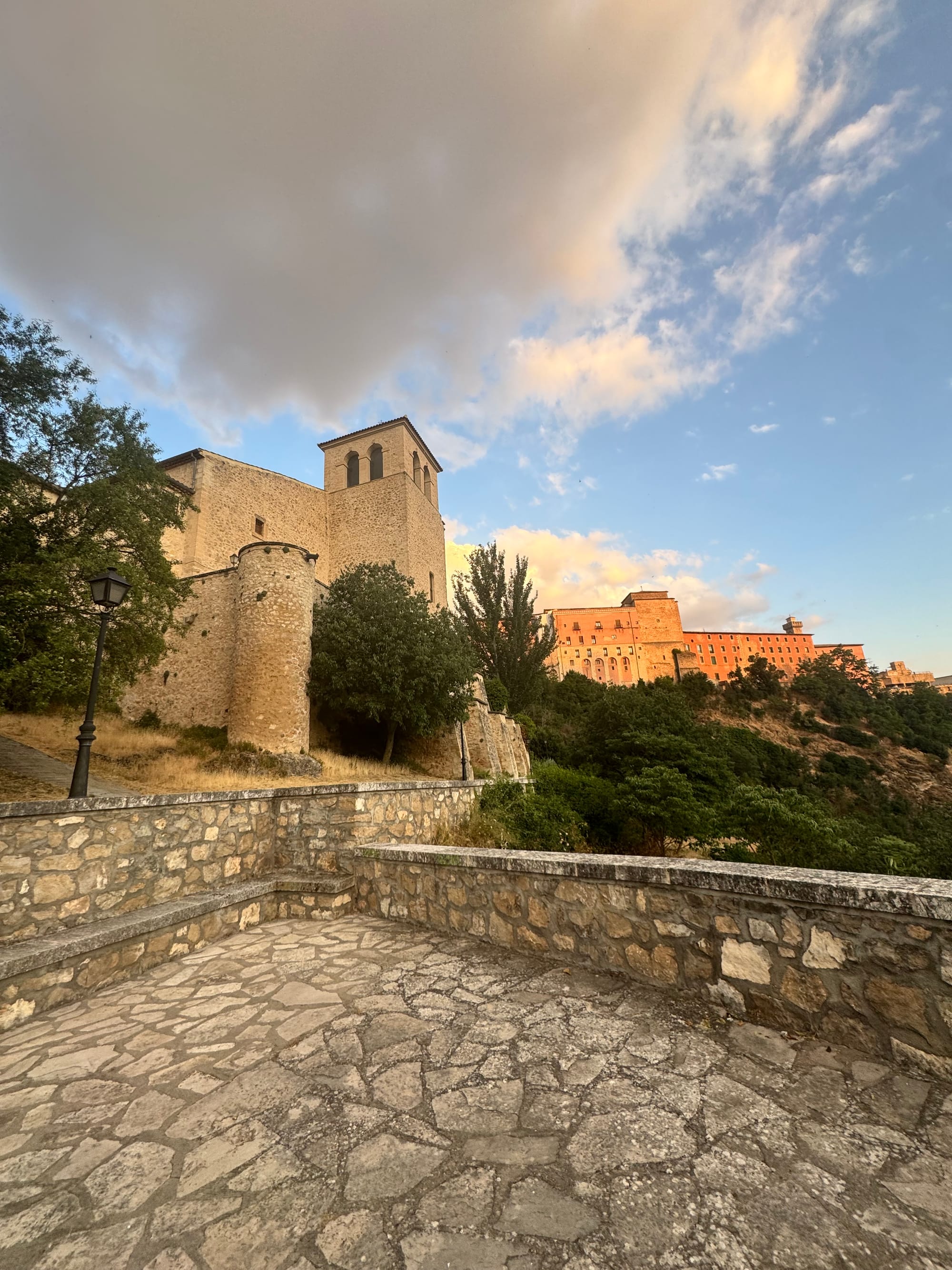
If you leave the main square and take the Bajada de San Miguel staircase down toward the Júcar river gorge, you hit this hidden gem.
- The Vibe: Originally built in the 13th century, this ancient church sits on a vertiginous stone ledge hanging directly over the abyss. It has beautiful Mudejar timber ceilings and an elegant Renaissance façade.
- The Production Hack: The building no longer holds standard religious services. Instead, it has been beautifully repurposed by the city into a cultural hall. If you track your timing right, you can catch an incredible acoustic concert or the "Luz Cuenca" immersive mapping show. Watching a 15-minute high-tech light and sound production bouncing off medieval stone arches inside a gorge is peak "Dora" exploration.
The Contemporary Flip: Iglesia de Santa Cruz
For a complete change of pace, seek out the 16th-century Church of Santa Cruz. While the stone architecture is strictly historic, the inside has been entirely converted into a sleek, avant-garde contemporary art museum housing the international Roberto Polo Collection. It is the ultimate high-low juxtaposition: world-class modern art displayed inside a majestic, vaulted Renaissance shell.
The Takeaway
John can make all the Dora the Explorer jokes he wants and as long as he keeps supplying the gear, I’m going to keep running the tracks. Cuenca totally shattered my expectations. It blends ancient history, affordable local living, abstract stained glass, dramatic iron bridges, and wild river swims into one perfect, high-velocity day trip.
Pack the backpack, grab the €10 train ticket, and get out here.
Talk soon (and probably loudly)
Jen